

Insulator accessories ANSI/IEC Certified Hardware & Protection for EHV Lines
DAMIANO is one of the oldest and quality manufacturers of insulator accessories. Insulator accessories as the name suggest are used with Pin , Disc / Strain , Post, and other insulators in overhead power lines . They are primarily made of hot dip galvanized steel and in some cases stainless steel for highly corrosive environments. They can be used with wide range of insulators including traditional porcelain and the silicon rubber insulators which have been introduced for last decade. The insulator accessories support the insulators on to the metallic structures like poles , transmission tower or lattice masts. They are most solid forged from high tensile steel giving them high strength which is essentially required to ensure that the insulators are safely installed . DAMIANO is ability to give additional protection in form of lead and nylon on the insulator accessories specially wherever additional insulation is required.
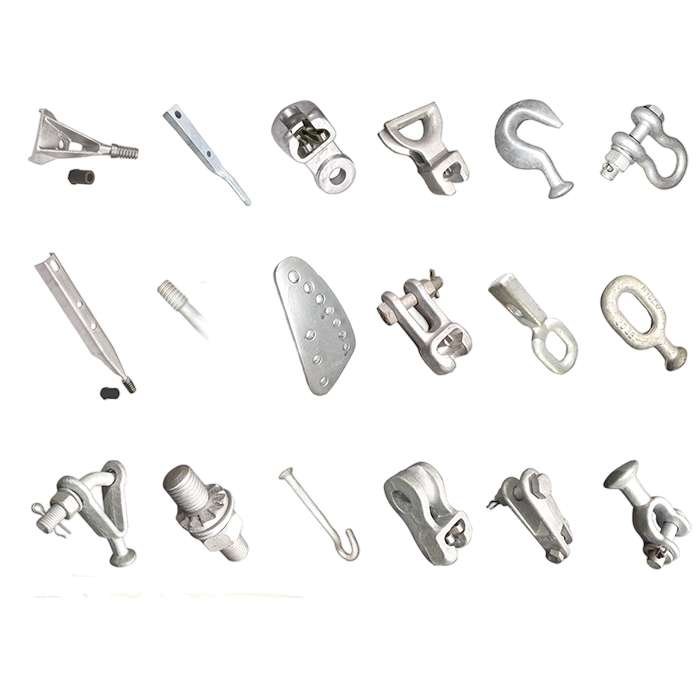
Our Range Comprises
Our Products
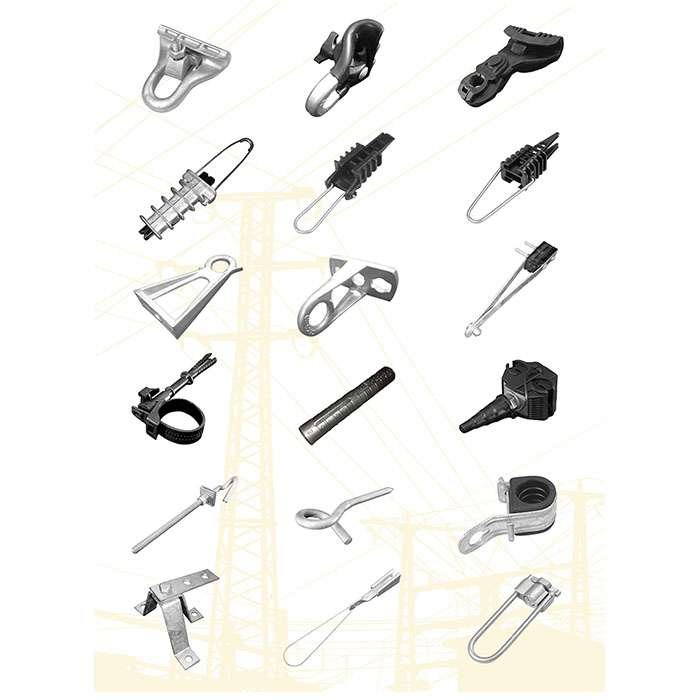
ABC Accessories
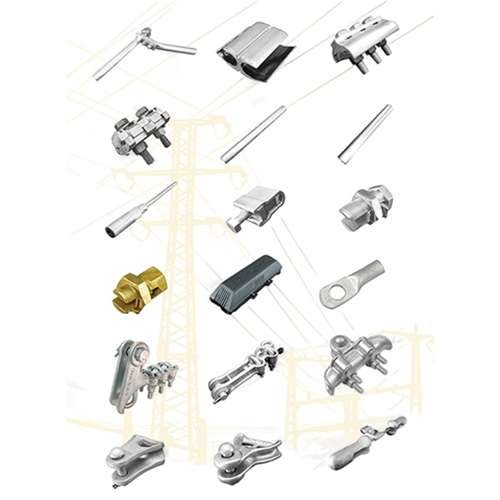
Conductor Accessories
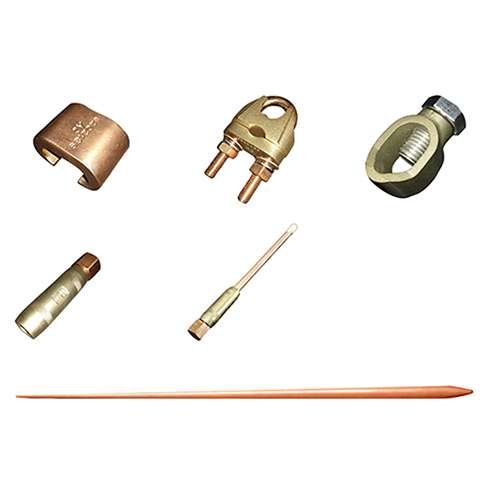
Grounding Equipments
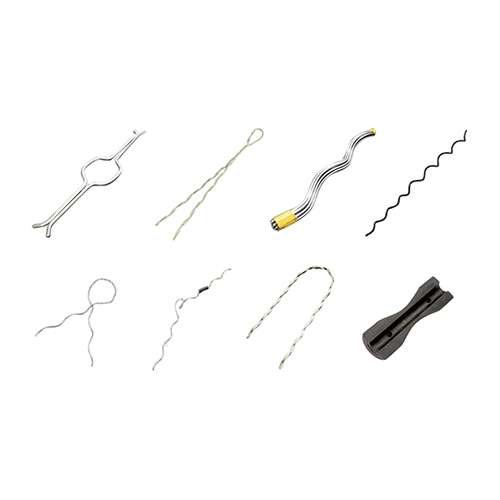
Helical Fittings
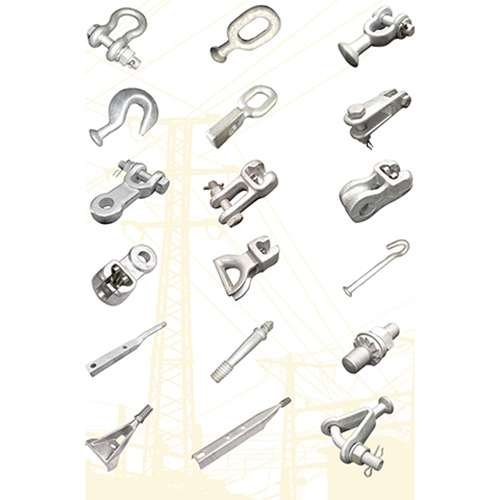
Insulator Accessories
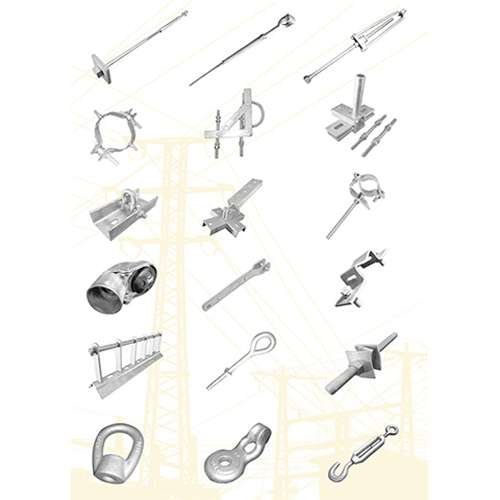
Pole Line Hardware
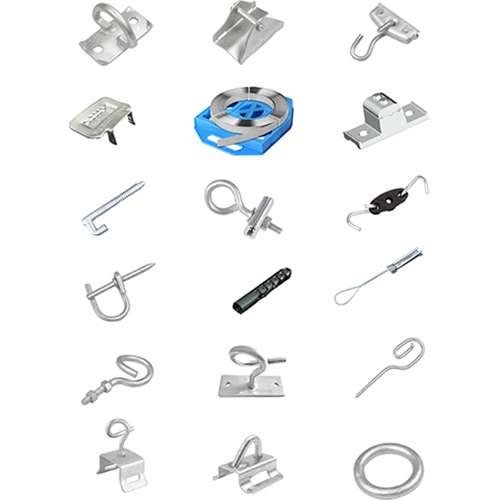
Telecommunication Accessories
To secure the top rank for Insulator Accessories, the page must serve as the single, most authoritative resource for procurement officers and electrical engineers. This requires demonstrating superior technical knowledge and compliance. Insulator accessories are the critical components that link insulator strings to the tower and to the conductor, while also protecting the entire system from electrical stress and damage.
Our product range is designed to exceed the mechanical and electrical performance requirements of high-voltage (HV) and extra-high-voltage (EHV) transmission and distribution systems.
Mechanical Attaching Fittings: Securing the Line Load
This hardware is responsible for bearing the massive mechanical loads (tension and weight) of the conductors and preventing catastrophic failure. Selection must prioritize Ultimate Tensile Strength (UTS) and material compatibility.
Ball-and-Socket & Clevis Fittings
The most common method for articulating insulator strings.
Ball-Eye and Socket-Eye: Used in suspension and tension strings, allowing for angular deflection and movement. Components must conform to IEC 60383 for interchangeability. We stock standard ball sizes, including 16mm, 20mm, and 24mm diameters.
Y-Clevises and Tongue & Clevis: Used primarily in dead-end applications where maximum strength and rigid anchoring are required. These fittings are crucial for transferring the full conductor tension load to the tower.
Hardware and Material Compliance
All structural steel components, such as cotter pins, yokes, and clevis links, are manufactured from high-strength forged steel and protected by Hot-Dip Galvanization (HDG), fully compliant with ASTM A123 to ensure maximum corrosion resistance over the lifecycle of the infrastructure.
Electrical and Protection Accessories: Mitigating System Stress
These accessories manage the electric field and protect the core insulator from damage caused by lightning, switching surges, and corona discharge.
Arcing Horns and Corona/Grading Rings
These components are essential for EHV systems (e.g., 132kV and above).
Corona/Grading Rings: Used to manage and smooth the electric field distribution around the insulator string, preventing highly localized stress that can lead to corona discharge and radio interference. Their geometry is critical for preventing insulator degradation.
Arcing Horns: Designed to flash over during transient over-voltages (lightning or surges), diverting the arc away from the fragile insulator surface and minimizing damage. They must be sized correctly based on the system's Basic Impulse Insulation Level (BIL).
Frequently Asked Questions (FAQs) about Insulator Accessories
- What is the required UTS rating for dead-end insulator accessories?
- The Ultimate Tensile Strength (UTS) of dead-end fittings must be greater than or equal to the rated breaking strength of the conductor or the insulator string itself, ensuring the accessory is the strongest link in the mechanical chain.
- Why are Ball-and-Socket fittings preferred over Clevis types in suspension strings?
- Ball-and-Socket fittings offer a full 360° range of motion and superior self-alignment under load, which is ideal for suspension points that experience conductor swing due to wind.
- What is the purpose of a Corona Ring?
- A Corona Ring (or Grading Ring) manages the electric field intensity at the ends of the insulator string, reducing the gradient to prevent localized stress that causes disruptive corona discharge, radio noise, and long-term insulator damage.
- Which IEC standard governs the interchangeability of insulator fittings?
- IEC 60383 (or its related parts) governs the dimensions and testing of string insulator units and related fittings, ensuring that Ball-and-Socket and Clevis components from different manufacturers can be safely integrated.
- How does HDG (ASTM A123) affect the mechanical strength of the hardware?
- The Hot-Dip Galvanization process itself does not significantly reduce the mechanical strength of forged steel hardware, provided the base steel meets the required standards. The primary function of HDG is corrosion protection.
- What is an Arcing Horn used for in insulator assemblies?
- Arcing Horns protect the insulator by providing a controlled air gap. During lightning strikes or switching surges, the arc jumps across the horns (the air gap) instead of over the insulator surface, preserving the insulator body from damage.
- What is the function of a 'Tension Clamp' in relation to accessories?
- The Tension Clamp (or Dead-End Clamp) is the fitting that grips the conductor and connects it directly to the first element of the insulator accessory string (e.g., the clevis or socket piece). (See also: Overhead Line Fittings)
- How does a Grading Ring differ from an Arcing Horn?
- A Grading Ring's primary role is electrical field equalization (static protection). An Arcing Horn's primary role is surge protection (dynamic protection) by providing a discharge path.
- What is the significance of the Ball Size (e.g., 20mm) in a Ball-Eye fitting?
- The Ball Size is a standardized dimension that dictates mechanical compatibility. It ensures that any 20mm Ball-Eye can be securely received by any 20mm Socket-Eye, regardless of the manufacturer.
- How is hardware rated for extreme weather conditions?
- Accessories are tested for mechanical loads under conditions simulating ice loading and extreme wind, in addition to being certified for corrosion resistance (HDG) and temperature range compatibility.
- What is the typical material for Clevis and Socket components?
- These are typically made from forged steel for maximum strength in transmission applications or high-strength malleable iron for distribution applications, almost always protected by Hot-Dip Galvanization (HDG).
- Why are Nylon/Polymer materials sometimes used in small accessory parts?
- Components like shear-head bolts or internal bushings use polymer materials to provide smooth operation, reduce friction, or provide an added layer of electrical insulation in non-tension applications.
- What is the BIL rating and how does it relate to protection accessories?
- BIL (Basic Impulse Insulation Level) is the measure of the system's ability to withstand lightning and switching surges. Protection accessories like Arcing Horns must be designed so that their flashover voltage coordinates correctly with the system's BIL.
- What is a Yoke Plate and where is it used?
- A Yoke Plate is a specialized accessory used to split a single conductor tension or suspension point into multiple insulator strings (or vice versa), typically used for bundled conductors or when coupling multiple insulators for higher load capacity.
- How often should insulator accessories be inspected for corrosion?
- Inspection frequency depends on the environment (coastal areas require more frequent checks), but general utility standards suggest visual inspections every 1 to 5 years, specifically looking for zinc coating failure on galvanized steel parts.
- What is the function of a Stockbridge Damper and is it an accessory?
- The Stockbridge Damper is a specialized Overhead line fitting (not strictly an insulator accessory) used to absorb and dissipate aeolian (wind-induced) conductor vibrations, preventing conductor fatigue failure near the clamp.
- What is a Dead-End Clamp?
- A Dead-End Clamp (or terminal clamp) is the accessory component that terminates the conductor and connects it to the final suspension/tension fitting, usually utilizing high-compression crimping or bolt assemblies for maximum holding power.
- What is the minimum ground clearance requirement for insulator strings?
- Minimum ground clearance is defined by local regulatory codes and is based on the system's nominal voltage, the phase-to-ground distance, and whether the line crosses roads, railroads, or residential areas. Accessories must maintain the required vertical distance.
- How can I ensure the accessories I purchase are dimensionally compliant?
- Always request the manufacturer's dimensional drawings and Certificate of Conformance (CoC), which confirms that the components (especially Ball-and-Socket and Clevis types) comply with relevant standards like IEC 60383.
- Why is field grading crucial in EHV insulator strings?
- Field grading is crucial because at EHV, uneven electric field distribution can lead to premature aging, tracking, and flashover on the insulator surface. Grading rings solve this by ensuring a more uniform voltage drop across each insulator unit.