

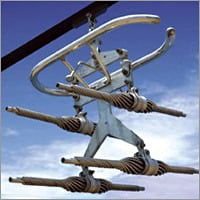
The Ultimate Guide to Conductor Fitting in India: Strengthening the National Grid
India is currently undergoing one of the most ambitious expansions of electrical infrastructure in the world. With initiatives pushing for universal rural electrification and the rapid upgrading of high-voltage transmission networks to support industrial growth, the physical components that make up the grid have never been more important. Among these critical components, finding reliable conductor fitting india solutions is a top priority for utility companies and EPC (Engineering, Procurement, and Construction) contractors.
A transmission line is only as strong as the hardware that supports it. In this comprehensive guide, we will explore the essential world of conductor fittings, the rigorous Indian Standards (IS) that govern them, and why Adamiano—based in West Bengal—is your premier partner for utility hardware.
What is a Conductor Fitting?
In overhead electrical distribution and transmission, conductors (the cables carrying the electricity) cannot simply be bolted directly to a tower. They must be suspended, tensioned, and protected using specialized hardware known as conductor fittings.
These metallic components serve as the mechanical interface between the live conductor and the insulator string, or directly to the utility pole in some low-voltage applications. They bear the immense physical weight of the cables, withstand extreme environmental conditions, and must maintain their mechanical integrity over decades of use. Without precision engineering in these fittings, overhead lines would sag dangerously, snap under tension, or vibrate until they break.
The Importance of IS 2486 Standards in India
When dealing with conductor fitting india projects, compliance with the Bureau of Indian Standards (BIS) is non-negotiable. For overhead power lines with a nominal voltage greater than 1000 Volts, the governing standard is IS 2486.
- IS 2486 (Part 1): Covers the general requirements, materials, and testing procedures for metal fittings.
- IS 2486 (Part 2): Specifies the strict dimensional requirements for insulator fittings, ensuring that clevises, tongues, ball and socket connections, and pins are universally interchangeable regardless of the manufacturer.
- IS 2486 (Part 3 & 4): Details the exact specifications and testing protocols for locking devices (like split-pins and W-shaped clips) that prevent heavy hardware from vibrating apart high in the air.
Adhering to these standards ensures that every piece of hardware can safely handle the load and seamlessly integrate into the vast Indian power grid.
Key Types of Conductor Fittings
To build a resilient utility network, engineers rely on a diverse array of hardware tailored to specific voltages and structural requirements.
1. Suspension and Tension Fittings
Suspension Clamps: Used on straight runs of transmission lines. They hang from the insulator string and cradle the conductor cable, supporting its downward weight while allowing a small degree of flexibility to absorb wind sway.
Dead-End (Tension) Clamps: Used at the ends of utility lines or at major turning angles. These heavy-duty clamps grip the conductor tightly and transfer the full pulling tension of the cable directly to the transmission tower.
2. Protective Hardware
Vibration Dampers: The Indian subcontinent experiences a variety of extreme wind conditions. Wind passing over a cable creates high-frequency aeolian vibrations. Dampers are clamped onto the conductor to absorb this kinetic energy, preventing the cable from suffering metal fatigue.
Armor Rods: Preformed helical metal rods wrapped tightly around the conductor at the suspension point. They protect the cable from bending stress, friction against the clamp, and electrical arcing.
3. Splicing and Jointing Accessories
Mid-Span Joints: Metal splicing tubes used to seamlessly join two separate lengths of conductor cable together. They are typically hydraulically compressed to ensure the joint is mechanically as strong as the cable itself.
Designing for the Indian Climate
Sourcing your conductor fitting india supplies means preparing for some of the most unforgiving environments on the planet. From the scorching 45°C summers of the northern plains to the torrential monsoons and the highly corrosive, salt-heavy air of India’s extensive coastlines, materials matter.
Hot-Dip Galvanized Steel: Standard steel will rust rapidly during the monsoon. Premium hardware uses forged steel that undergoes hot-dip galvanization, creating a thick zinc coating that prevents rust for decades.
High-Strength Aluminum Alloy: Highly preferred for suspension clamps because it is lightweight, highly resistant to corrosion, and non-magnetic. Being non-magnetic is crucial for high-voltage lines to prevent the generation of eddy currents, which would heat the hardware and cause massive power losses.
Why Choose Adamiano?
Building a resilient utility network requires a manufacturer with proven expertise, massive production capacity, and unyielding quality control. When looking for the best conductor fitting india has to offer, Adamiano stands out.
Operating from our advanced facility in Howrah, West Bengal, we specialize in forging, casting, and machining top-tier utility components. Whether you require custom-engineered vibration dampers, heavy-duty dead-end clamps, or complex fitting assemblies, Adamiano delivers excellence that meets all IS, IEC, and ASTM standards.
Contact Adamiano Today:
Company: Adamiano
Address: Howrah – Bargachia – Amta Rd, Santoshpur, West Bengal 7114, India
Email: info@adamiano.com
Phone: +91 86172 97060
Website: ../