

The Definitive Guide to Transmission Line Hardware & Fittings in India (HV/EHV)
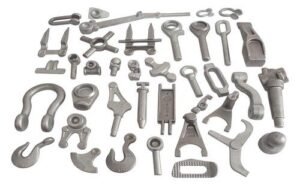
The efficiency and reliability of India’s vast power infrastructure, from 132 kV High Voltage (HV) to 765 kV Extra High Voltage (EHV) transmission lines, depend entirely on the quality and compliance of its Transmission Line Hardware and Fittings. These components form the critical mechanical and electrical interface between the conductor, the insulator string, and the tower structure. They must be engineered not only for massive static loads but also to withstand India’s diverse environmental challenges, including high salinity in coastal regions and extreme thermal variations.
As a trusted supplier to central bodies like POWERGRID Corporation of India Ltd. and various State Transmission Utilities (STUs), our commitment is to provide hardware that adheres strictly to Indian Standards (IS) and international benchmarks like IEC.
Classification and Technical Requirements of Line Fittings
Transmission line fittings are broadly categorized based on their primary function: Suspension, Tension (Dead-End), and Protection/Damping.
Suspension Fittings: Supporting the Vertical Load
Suspension assemblies are used at intermediate points along a straight run of the transmission line. Their primary role is to hold the conductor’s weight, allowing the conductor to swing and move laterally to compensate for wind and thermal expansion.
Key components in a suspension assembly include:
- Suspension Clamp: Attaches directly to the conductor. It must have a specified Slip Strength (or holding power) high enough to resist wind and vibration while allowing controlled slip during extreme events.
- Yoke Plates: Used for bundled conductors to connect multiple insulator strings and ensure balanced load distribution.
- Shackle and Clevis: Link the components of the assembly together.
All suspension hardware must be manufactured from high-strength Malleable Cast Iron or Forged Steel and protected by Hot-Dip Galvanization (HDG) as per IS:2633 and ASTM A123 for durability in India’s climate.
Tension (Dead-End) Fittings: Anchoring the Line
Tension assemblies are the strongest hardware on the line, used at terminal points (substations), major angle towers, or crossing points. They must bear the full Ultimate Tensile Strength (UTS) of the conductor.
- Compression Dead-End Clamps: The most reliable type for EHV lines, maintaining 95% or more of the conductor’s rated breaking strength.
- Bolted Tension Clamps: Used for lower voltage lines with dependable mechanical grip.
The selection of tension hardware is paramount. Failures are usually catastrophic. Specifications for conductor types (ACSR, AAAC, etc.) follow IS: 2121.
Electrical and Protection Hardware: Ensuring EHV System Integrity
Damping and Spacing Accessories
In the Indian power grid, long spans and bundled conductors require specialized accessories to mitigate vibration and conductor clashing.
- Spacer Dampers: Maintain spacing between bundled conductors while reducing sub-span oscillation.
- Stockbridge Vibration Dampers: Dissipate aeolian vibration energy near suspension points.
Insulator Protection Accessories
- Corona and Grading Rings: Essential for EHV lines to smooth electric fields and prevent corona discharge.
- Arcing Horns: Provide a safe path for lightning and switching surges, protecting insulators.
Compliance, Quality, and Localized Expertise
Quality Assurance and Material Specifications
- IS Code Adherence: All fittings comply with relevant Indian Standards governing materials and testing.
- Galvanization: Meets ASTM A123 / IS:4759 standards to ensure long operational life.
- Testing Protocols: Includes UTS tests, slipping strength tests, and RIV tests as required by Indian utilities.
Localization and Supply Chain in India
Our hardware solutions cater to all major utility voltage classes:
- 66 kV, 132 kV, 220 kV (HV Lines)
- 400 kV, 765 kV (EHV Lines)
- ±800 kV (UHVDC Systems)
We work closely with PGCIL, STUs (UPPTCL, GETCO, MSETCL), and private developers to meet strict tender requirements.
Frequently Asked Questions (FAQs) for Transmission Hardware in India
Q1: What are the primary IS codes for Transmission Line Hardware?
A: Key standards include IS: 2121 and galvanization standards IS:2633 / IS:4759.
Q2: Which type of damper is essential for bundled conductors?
A: Spacer Dampers are mandatory for 220 kV and above lines.
Q3: What is the required minimum holding power for Dead-End Clamps?
A: At least 95% of the conductor’s rated UTS.
Q4: Why is Hot-Dip Galvanization critical in coastal areas?
A: HDG protects steel from high salinity corrosion.
Q5: Do you supply POWERGRID-compliant hardware?
A: Yes, all hardware is tested and manufactured as per POWERGRID Technical Specifications.
Q6: What is the purpose of a Tee Connector?
A: It allows tapping for substations or reactors using PG-type connections.
Q7: What is RIV testing?
A: Ensures fittings do not generate harmful radio interference due to corona discharge.
Q8: How is conductor vibration mitigated?
A: By installing Stockbridge Vibration Dampers at calculated positions.
Q9: What materials are used for EHV yoke plates?
A: High-strength forged steel or aluminum alloy.
Q10: What certifications should suppliers have?
A: ISO 9001, BIS certification, and NABL-accredited type test reports (CPRI, ERDA).
{
“@context”: “https://schema.org”,
“@graph”: [
{
“@type”: “Product”,
“name”: “Transmission Line Hardware & Fittings for Indian Utilities”,
“description”: “Manufacturer and supplier of IS and IEC compliant Transmission Line Hardware and Accessories for HV/EHV systems (132kV to 765kV) in India.”,
“sku”: “TLH-IND-2025-V1”,
“brand”: {
“@type”: “Brand”,
“name”: “Damiano”
},
“aggregateRating”: {
“@type”: “AggregateRating”,
“ratingValue”: “4.9”,
“reviewCount”: “125”
},
“offers”: {
“@type”: “Offer”,
“priceCurrency”: “INR”,
“price”: “Request Quote”,
“availability”: “https://schema.org/InStock”
}
},
{
“@type”: “FAQPage”,
“mainEntity”: [
{
“@type”: “Question”,
“name”: “What are the primary IS codes for Transmission Line Hardware?”,
“acceptedAnswer”: {
“@type”: “Answer”,
“text”: “Key Indian Standards include IS: 2121 (for conductor fittings like clamps) and IS: 2633 / IS:4759 (for galvanization and material standards). Compliance with these is mandatory for utility tenders in India.”
}
},
{
“@type”: “Question”,
“name”: “Which type of damper is essential for bundled conductors in India?”,
“acceptedAnswer”: {
“@type”: “Answer”,
“text”: “Spacer Dampers are critical for bundled conductors (220kV and above) as they control sub-span oscillation and maintain conductor geometry, which is vital for preventing clashes.”
}
},
{
“@type”: “Question”,
“name”: “What is the required minimum holding power for Dead-End Clamps?”,
“acceptedAnswer”: {
“@type”: “Answer”,
“text”: “Dead-End (Tension) Clamps must typically hold the conductor with an efficiency of 95% or more of the conductor’s rated Ultimate Tensile Strength (UTS).”
}
},
{
“@type”: “Question”,
“name”: “Why is Hot-Dip Galvanization (HDG) critical for hardware in coastal areas of India?”,
“acceptedAnswer”: {
“@type”: “Answer”,
“text”: “HDG (per ASTM A123) provides a thick zinc layer that sacrifices itself to protect the underlying steel from the accelerated corrosion caused by high salinity and humidity in regions like Gujarat, Mumbai, and Chennai.”
}
},
{
“@type”: “Question”,
“name”: “Do you supply hardware compliant with POWERGRID specifications?”,
“acceptedAnswer”: {
“@type”: “Answer”,
“text”: “Yes, all our EHV hardware is designed, manufactured, and tested strictly according to the latest POWERGRID Technical Specifications (e.g., Section D, E) and relevant approved vendor list (AVL) requirements.”
}
},
{
“@type”: “Question”,
“name”: “What is the function of a ‘Tee Connector’ in transmission lines?”,
“acceptedAnswer”: {
“@type”: “Answer”,
“text”: “A Tee Connector is a parallel groove (PG) type clamp used for making an electrical connection or tapping off a major line, typically for a new substation feed or shunt reactor connection.”
}
},
{
“@type”: “Question”,
“name”: “What is the main purpose of RIV testing on hardware?”,
“acceptedAnswer”: {
“@type”: “Answer”,
“text”: “RIV (Radio Interference Voltage) testing is critical for EHV hardware to ensure that fittings do not generate excessive radio frequency noise due to corona discharge, which can interfere with communication systems.”
}
},
{
“@type”: “Question”,
“name”: “How is conductor vibration mitigated on long spans?”,
“acceptedAnswer”: {
“@type”: “Answer”,
“text”: “Conductor vibration, specifically aeolian vibration, is mitigated by installing Stockbridge Vibration Dampers at specific points near the suspension assembly, tailored to the span length and conductor type.”
}
},
{
“@type”: “Question”,
“name”: “What is the material used for EHV yoke plates and terminals?”,
“acceptedAnswer”: {
“@type”: “Answer”,
“text”: “EHV fittings (yoke plates, terminals) are typically made from high-strength forged steel for maximum mechanical integrity, or high-strength aluminum alloy for superior electrical conductivity in terminal pads.”
}
},
{
“@type”: “Question”,
“name”: “What certification should I look for in a local Indian supplier?”,
“acceptedAnswer”: {
“@type”: “Answer”,
“text”: “Look for ISO 9001 certified manufacturing, BIS (Bureau of Indian Standards) certification for material quality, and specific type test certificates from NABL-accredited labs (like CPRI, ERDA) for all critical fittings.”
}
}
]
},
{
“@type”: “WebPage”,
“name”: “Transmission Line Hardware & Fittings in India: IS, IEC, and POWERGRID Compliant Solutions”,
“url”: “https://adamiano.com/transmission-line-hardware-fittings-india/”,
“datePublished”: “2025-12-04”,
“dateModified”: “2025-12-04”,
“mainEntityOfPage”: {
“@type”: “WebPage”,
“@id”: “https://adamiano.com/transmission-line-hardware-fittings-india/”
}
}
]
}