

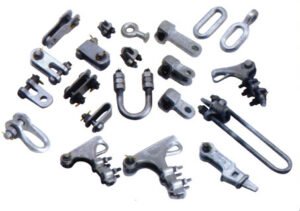
The Ultimate Guide to Overhead Line Fittings: Types, Selection, and Certification
In the world of high-voltage transmission and distribution, the conductor carries the current,
but it’s the overhead line fitting that ensures the system remains mechanically secure,
electrically safe, and structurally sound against all environmental stresses.
These components are the unsung heroes of the power grid. Choosing the wrong type or substandard
quality fitting can lead to conductor failure, expensive outages, and safety hazards.
This comprehensive guide breaks down the essential categories, selection criteria, and technical
standards you need to know.
Defining the Core Categories of OHL Fittings
Overhead line fittings are broadly categorized by the function they perform on the conductor:
supporting the weight, anchoring the line, or protecting it from dynamic stress.
1. Suspension Fittings: Supporting the Conductor
Suspension fittings are used at intermediate towers or poles to support the vertical weight of
the conductor, allowing it to “hang” freely. They are designed to accommodate conductor movement
due to wind and temperature changes while minimizing bending stress.
Suspension Clamps
These are the most common type. They cradle the conductor gently and are designed to slip before
damaging the conductor if an excessive load (like a broken adjacent span) occurs. They often include
an anti-corona ring for high-voltage applications.
Yoke Plates
Used in conjunction with suspension clamps and insulators, these plates connect multiple
components in a bundle configuration.
2. Tension and Anchoring Fittings: The Dead End
Tension fittings, often called “dead ends,” are required where the conductor terminates,
changes direction (corners), or where the line needs to be sectionalized. These components bear
the full mechanical load (tension) of the conductor, making their design critical.
Compression Dead-Ends
These high-strength fittings are permanently pressed (crimped) onto the conductor. They are used
for full-tension applications and typically guarantee 95% or more of the conductor’s ultimate
tensile strength (UTS).
Preformed Helical Grips (Dead-Ends)
A popular tool-less option, these overhead line fittings are wrapped around the conductor,
distributing the mechanical stress evenly over a long length. They are versatile and widely used
for guying and light to medium tension lines.
Tension Clamps
Heavy-duty, mechanical clamps used for anchoring conductors where high slip strength is required.
Internal Link: View our full range of certified, high-strength
Suspension and Tension Fittings
engineered for maximum mechanical load distribution.
3. Conductor Protection Fittings: Mitigating Fatigue
Conductors are constantly subject to environmental forces, particularly Aeolian vibration
(wind-induced oscillation) and sub-span oscillation. Protection fittings ensure the conductor
does not fail prematurely due to fatigue.
Vibration Dampers (Stockbridge Type)
These fittings consist of weights connected by a steel messenger cable. They are strategically
placed along the span to absorb and dissipate the kinetic energy caused by vibration, dramatically
extending the conductor’s lifespan.
Armour Rods / Repair Sleeves
Used primarily at support points to reinforce the conductor against abrasion, arching, or bending
stress. They can also be used to repair damaged conductor strands.
The Electrical Connection: Clamps and Connectors
While technically considered accessories, the fittings used for making electrical connections are
equally critical for system performance, as they ensure current transfer with minimal resistance.
Insulation Piercing Connectors (IPC)
Essential for making safe, watertight taps on Aerial Bundled Cables (ABC). They eliminate the need
to strip insulation, providing a sealed connection ideal for live-line work.
Parallel Groove Clamps (PG Clamps)
Used to connect two bare conductors in parallel or to make non-tension taps. They are designed for
easy installation and excellent electrical performance.
Compression Joints
Used for permanent, high-conductivity splicing of conductors, ensuring the electrical path is seamless.
Internal Link: Explore our wide selection of
MV Connectors and associated clamps,
including IPCs and compression joints.
Critical Selection Factors: Choosing the Right Overhead Line Fitting
Choosing the correct OHL fittings is a precise engineering task that relies on several key parameters.
Material Selection and Corrosion Resistance
The operational environment dictates the material. Fittings are typically manufactured from:
- Aluminum Alloy: Used for direct contact with aluminum conductors to prevent
galvanic corrosion and ensure high conductivity. - Malleable Iron / Steel: Used for structural components like pole hardware.
These components require a protective coating.
Hot-Dip Galvanization (HDG): This is non-negotiable for all steel and iron fittings.
HDG provides a thick, sacrificial zinc layer that protects the base metal from rust and corrosion
for decades, especially vital in coastal or polluted environments.
Technical Performance Parameters
Any reputable overhead line fitting manufacturer must provide data on the following:
- UTS (Ultimate Tensile Strength): The maximum pull force the fitting can withstand
before breaking. - SML (Specified Mechanical Load): For insulators, the mechanical load it can handle.
- Slip Strength: The maximum load the fitting can bear before the conductor begins to
slip out (critical for tension fittings).
The Role of BIS and IEC Standards
Reliability in power infrastructure demands certified components. When sourcing overhead line fitting
components, always verify compliance with the relevant standards:
- IEC 61284: Specifies the requirements and tests for compression and mechanical
clamping type OHL fittings for all conductors. - IS 398 (Part I–V): Covers the standards for different bare conductors, which
dictates the design requirements for all mating fittings. - IS 14255: The standard governing Aerial Bundled Cables (ABC), which drives the
specification for IPCs and related accessories.
Frequently Asked Questions (FAQ)
What is the primary function of an overhead line fitting?
The primary function of an overhead line fitting is to provide a mechanical connection between
the conductor and the supporting structure (pylon or pole), ensuring electrical continuity and
structural integrity. They must bear the mechanical load (tension and weight) and protect the
conductor from damage due to movement, vibration, and corrosion.
What is the difference between a suspension clamp and a tension clamp?
Suspension clamps (or tangent clamps) are used at intermediate points on the line to support the
conductor’s weight. They allow the conductor to pass through and are not designed to hold high
tension. Tension clamps (or dead-end grips) are used at the start, end, or corners of the line
to hold the full mechanical tension of the conductor, preventing slippage or breaking.
How do vibration dampers protect the conductor?
Conductors vibrate naturally due to wind (Aeolian vibration). If left unchecked, this vibration
causes metal fatigue and eventual conductor breakage near the clamp. Vibration dampers, like the
Stockbridge type, absorb the energy of this vibration through the movement of their weights,
dissipating the stress before it can damage the conductor.
What does “Hot-Dip Galvanization (HDG)” mean for a steel fitting?
Hot-Dip Galvanization (HDG) is a process where the steel fitting is coated with a thick layer of zinc.
This zinc layer acts as a sacrificial anode, protecting the underlying steel from rust and corrosion,
which is essential for ensuring the longevity of fittings exposed to the elements.
Damiano: Your Certified Partner for OHL Fittings
Adamiano is committed to supplying certified, durable overhead line fittings that meet the stringent
demands of modern power infrastructure. Our end-to-end manufacturing process—from metal casting and
forging to hot-dip galvanization and in-house testing—guarantees superior quality and compliance with
all global and national standards. Partner with us for reliable solutions that keep the power flowing.
{
“@context”: “https://schema.org”,
“@type”: “FAQPage”,
“mainEntity”: [
{
“@type”: “Question”,
“name”: “What is the primary function of an overhead line fitting?”,
“acceptedAnswer”: {
“@type”: “Answer”,
“text”: “The primary function of an overhead line fitting is to provide a mechanical connection between the conductor and the supporting structure (pylon or pole), ensuring electrical continuity and structural integrity. They must bear the mechanical load (tension and weight) and protect the conductor from damage due to movement, vibration, and corrosion.”
}
},
{
“@type”: “Question”,
“name”: “What is the difference between a suspension clamp and a tension clamp?”,
“acceptedAnswer”: {
“@type”: “Answer”,
“text”: “Suspension clamps (or tangent clamps) are used at intermediate points on the line to support the conductor’s weight. They allow the conductor to pass through and are not designed to hold high tension. Tension clamps (or dead-end grips) are used at the start, end, or corners of the line to hold the full mechanical tension of the conductor, preventing slippage or breaking.”
}
},
{
“@type”: “Question”,
“name”: “How do vibration dampers protect the conductor?”,
“acceptedAnswer”: {
“@type”: “Answer”,
“text”: “Conductors vibrate naturally due to wind (Aeolian vibration). If left unchecked, this vibration causes metal fatigue and eventual conductor breakage near the clamp. Vibration dampers, like the Stockbridge type, absorb the energy of this vibration through the movement of their weights, dissipating the stress before it can damage the conductor.”
}
},
{
“@type”: “Question”,
“name”: “What does “Hot-Dip Galvanization (HDG)” mean for a steel fitting?”,
“acceptedAnswer”: {
“@type”: “Answer”,
“text”: “Hot-Dip Galvanization (HDG) is a process where the steel fitting is coated with a thick layer of zinc. This zinc layer acts as a sacrificial anode, protecting the underlying steel from rust and corrosion, which is essential for ensuring the longevity of fittings exposed to the elements.”
}
}
]
}