

Pole Line Hardware in India – Manufacturer & Supplier | Damiano
Looking for reliable pole line hardware in India for LT/11kV/33kV distribution and transmission? Damiano manufactures and supplies cross arms, stay sets, guy grips, clamps, connectors, and insulator fittings engineered for durability, consistent torque, and long service life.
Why Choose Damiano for Pole Line Hardware?
- Complete range: Cross arms (MS/FRP), HT/LT stay sets, guy grips/dead-ends, shackles, yoke plates, clamps & connectors, ABC/telecom accessories.
- Build quality: High-tensile steels, aluminium alloys, hot-dip galvanizing, controlled thread tolerances, proof-load tested hardware.
- Project readiness: Drawings, batch traceability, test certificates, and swift dispatch for utilities and EPCs.
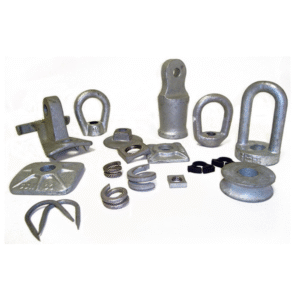
Our Pole Line Hardware Range
Cross Arms (Straight, V, Y)
Mild Steel and FRP options with standard hole patterns; thicknesses and sections as per utility schedules. Hot-dip galvanized MS; UV-stabilized FRP.
HT & LT Stay Sets
Anchors, stay rods, plates, turnbuckles, stay wires and thimbles. Diameters/lengths for LT/11kV/33kV; corrosion protection for coastal zones.
Guy Grips / Preformed Dead-Ends & Armour Rods
Preformed products for AAC/AAAC/ACSR and AB cable. High grip strength, conductor-friendly pressure distribution.
Clamps, Connectors & Brackets
Suspension clamps, tension clamps, PG clamps, pole top brackets, D-iron brackets; alloy and galvanized steel options.
Insulator Hardware & Fittings
Shackle bolts, yoke plates, eye/clevis fittings, pins and washers compatible with pin, disc and post insulators.
ABC & Telecom Accessories
Service clamps, wedges, anchoring brackets, cable suspension clamps, lashing wires and tower accessories.
Technical Highlights & Materials
- Metals: High-tensile steels, galvanizing to heavy-duty coating mass; aluminium/aluminium alloy components where weight and conductivity matter.
- Threads & Fasteners: Controlled tolerances, locking options, zinc coatings where specified.
- Testing: Proof load, tensile, coating thickness and salt-spray per project requirements.
How to Choose Pole Line Hardware in India
By Voltage Class
LT vs 11kV vs 33kV dictates cross-arm sections, hole patterns, insulator hardware ratings, and stay set sizes.
By Environment
Coastal/industrial corrosion → heavier galvanizing or stainless; high-wind zones → upgraded stay assemblies/guy grips.
By Conductor/Cable Type
AAC/AAAC/ACSR vs AB cable requires matched preformed fittings, clamps and spacers.
Applications
Rural/urban distribution, industrial estates, renewable evacuation, smart cities, railway electrification, and telecom OSP.
FAQs
Do you provide drawings and test certificates?
Yes—GA drawings, material and test certificates are supplied per batch.
Can you supply for coastal or high-wind projects?
Yes—material/coating and mechanical ratings are configured to your environment and code requirements.
Get a Quote / Catalogue
Explore SKUs, sections and finish options here: Pole Line Hardware Catalogue.
For project pricing and lead times, Request a Quote.
{
“@context”: “https://schema.org”,
“@graph”: [
{
“@type”: “Product”,
“name”: “Pole Line Hardware and Accessories”,
“description”: “Supplier of structural and distribution pole line accessories, including Cross Arms, Guying Hardware, and Insulator Support Fittings, compliant with ASTM A123 standards.”,
“sku”: “PLH-ACC-2025-GL”,
“brand”: {
“@type”: “Brand”,
“name”: “Damiano”
},
“aggregateRating”: {
“@type”: “AggregateRating”,
“ratingValue”: “4.9”,
“reviewCount”: “150”
},
“offers”: {
“@type”: “Offer”,
“priceCurrency”: “USD”,
“price”: “Request Quote”,
“availability”: “https://schema.org/InStock”
}
},
{
“@type”: “FAQPage”,
“mainEntity”: [
{
“@type”: “Question”,
“name”: “What is the primary difference between ‘Pole Line Hardware’ and ‘Overhead Line Fittings’?”,
“acceptedAnswer”: {
“@type”: “Answer”,
“text”: “Pole Line Hardware refers to the structural components (bolts, braces, bands, anchors) that attach items to the pole itself, securing the entire structure. Overhead Line Fittings refer to the components (clamps, dead-ends, vibration dampers) that interact directly with the conductor to support or terminate the line.”
}
},
{
“@type”: “Question”,
“name”: “What does the term ‘HDG’ stand for in pole line hardware?”,
“acceptedAnswer”: {
“@type”: “Answer”,
“text”: “HDG stands for Hot-Dip Galvanization. It is the process where fabricated steel is immersed in a bath of molten zinc, creating a highly durable, corrosion-resistant coating that is essential for long-term outdoor utility applications.”
}
},
{
“@type”: “Question”,
“name”: “Which ASTM standard is most relevant for pole line hardware corrosion protection?”,
“acceptedAnswer”: {
“@type”: “Answer”,
“text”: “ASTM A123 is the standard specification for zinc (hot-dip galvanized) coatings on iron and steel products. Adherence to this standard ensures the required minimum zinc coating thickness and uniform protection.”
}
},
{
“@type”: “Question”,
“name”: “Why is pole class compatibility important for hardware sizing?”,
“acceptedAnswer”: {
“@type”: “Answer”,
“text”: “Pole class dictates the pole’s circumference and taper. Hardware like Pole Bands and mounting brackets must be sized precisely to fit the specific pole circumference at the mounting location to ensure a secure, high-tension fit that does not compromise the pole’s structural integrity.”
}
},
{
“@type”: “Question”,
“name”: “What is the typical expected lifespan of galvanized pole line hardware?”,
“acceptedAnswer”: {
“@type”: “Answer”,
“text”: “Under normal atmospheric conditions (non-coastal, moderate pollution), properly HDG hardware conforming to ASTM A123 can have an expected service life of 30 to 50 years or more.”
}
},
{
“@type”: “Question”,
“name”: “What is the function of a Cross Arm Brace?”,
“acceptedAnswer”: {
“@type”: “Answer”,
“text”: “The primary function of a Cross Arm Brace is to provide lateral and diagonal support to the cross arm, preventing rotation, minimizing sag, and stabilizing the arm against unbalanced loads from wind or broken conductors.”
}
},
{
“@type”: “Question”,
“name”: “Why use a Pole Band instead of drilling a mounting hole?”,
“acceptedAnswer”: {
“@type”: “Answer”,
“text”: “Using a Pole Band (or pole clamp) avoids penetrating the pole’s center, which preserves its full structural strength and often reduces installation time. It is necessary for mounting heavy equipment like transformers or risers that require uniform load distribution.”
}
},
{
“@type”: “Question”,
“name”: “What is the difference between a Machine Bolt and a Carriage Bolt in pole hardware?”,
“acceptedAnswer”: {
“@type”: “Answer”,
“text”: “Machine Bolts are used where a wrench can access both the head and the nut for high-torque fastening. Carriage Bolts have a dome head and a square neck that bites into the wood, preventing rotation and allowing the nut to be tightened from one side only.”
}
},
{
“@type”: “Question”,
“name”: “How do you prevent hardware from loosening due to vibration?”,
“acceptedAnswer”: {
“@type”: “Answer”,
“text”: “Use specialized locking mechanisms, primarily lock washers (like spring or split washers), self-locking nuts, or nylon insert nuts (Nylock), which maintain clamping force despite wind or conductor vibration.”
}
},
{
“@type”: “Question”,
“name”: “What force does a Guy Assembly counteract?”,
“acceptedAnswer”: {
“@type”: “Answer”,
“text”: “A Guy Assembly counteracts the unbalanced tension load applied to the pole, typically at corner poles, dead-end structures, or transition points where the line changes direction or terminates.”
}
}
]
},
{
“@type”: “WebPage”,
“name”: “Pole Line Hardware & Accessories: The Definitive Guide to Structural Utility Components”,
“url”: “https://adamiano.com/pole-line-hardware-accessories-components/”,
“datePublished”: “2025-12-04”,
“dateModified”: “2025-12-04”,
“mainEntityOfPage”: {
“@type”: “WebPage”,
“@id”: “https://adamiano.com/pole-line-hardware-accessories-components/”
}
}
]
}